
Why Fascia Health is so Critical for Mobility and Aging Well
Aug 23, 2026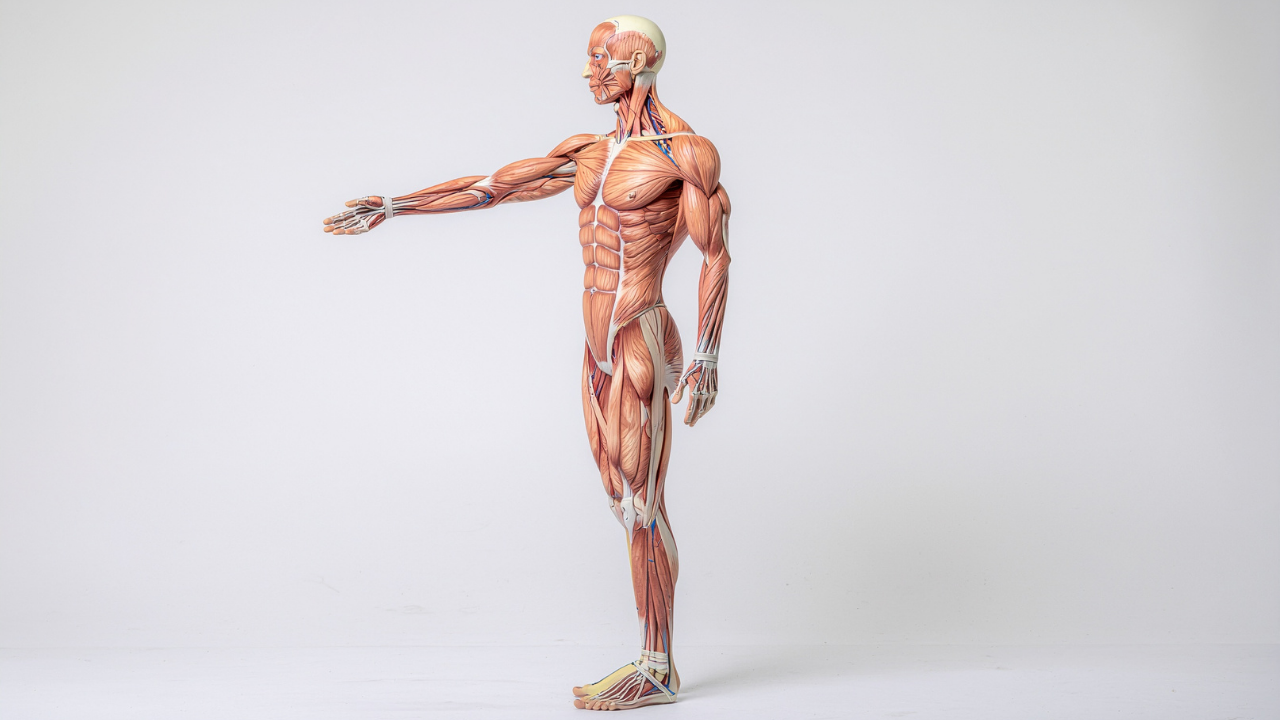
In recent years, fascia has become a popular topic in the health and fitness world, although much of the discussion tends to swing between extremes. Some approaches treat fascia as almost mystical, while others reduce it to a simple tissue problem that needs to be aggressively stretched, rolled, or “released.” Neither perspective fully captures its importance.
Fascia is better understood as part of a highly integrated communication system within the body. It influences movement quality, coordination, stability, force transfer, sensory awareness, and even how safe or protected the body feels to the brain. When fascia functions well, movement tends to feel smoother, more efficient, and more connected. When the system becomes overloaded, stressed, underused, or less adaptable, the body often begins to communicate this through stiffness, tension, restricted movement, or discomfort.
Understanding fascia through a brain-first lens entirely changes the conversation around mobility and aging.
Fascia Is More Than Connective Tissue
Fascia is a continuous web of connective tissue that surrounds and connects muscles, joints, bones, nerves, blood vessels, and organs throughout the body. Rather than thinking about the body as isolated parts working independently, fascia helps organize the body as one interconnected system.
Traditionally, fascia was viewed mostly as packaging or support tissue. Today, we understand that it plays a much more dynamic role. Fascia helps transmit force, distribute tension, support posture, assist with movement efficiency, and contribute to stability. But one of its most important roles is sensory.
Fascia contains a large number of sensory receptors that constantly send information to the brain about pressure, movement, position, stretch, and tension. This information helps the brain create a map of the body and determine how safe, stable, and coordinated movement feels at any given moment.
That matters because the brain predicts before it reacts.
Every movement the body makes is influenced by prediction. The nervous system is continuously evaluating incoming information and asking questions such as: Does this movement feel safe? Does the body have enough stability and control? Is there uncertainty or threat present? Based on those interpretations, the brain adjusts muscle tone, movement options, coordination, balance, and protective responses.
This is one reason why the sensation of tightness is not always simply a muscle-length issue. Many people assume that if they feel stiff, they just need to stretch harder. But tightness is often a protective output from the nervous system. If the brain perceives uncertainty, instability, stress, or lack of control, it may increase tension to create more protection.
When the brain senses uncertainty, it prioritizes protection over performance.
Why Fascia Changes Over Time
Fascia is highly adaptable tissue. Healthy fascia tends to be well hydrated, elastic, responsive, and capable of handling movement variability efficiently. It allows the body to transition smoothly between positions and absorb force effectively. But like every other system in the body, fascia responds to how we live.
Stress, inactivity, repetitive movement patterns, poor sleep, chronic inflammation, injury history, emotional overload, lack of recovery, and prolonged sitting can all influence fascial behavior and sensory input. Over time, the body may begin narrowing movement options. Certain muscles become overused while others contribute less efficiently. Breathing patterns change. Coordination decreases. The nervous system becomes more protective.
This adaptation process often happens gradually, which is why many people describe feeling as though their body became stiff “all of a sudden,” when in reality the system has been adapting for years.
Aging can amplify this process, especially if movement variability and recovery capacity decline over time. Hydration changes, reduced physical exploration, chronic stress, and less sensory stimulation all influence how adaptable the body remains. But this does not mean decline is inevitable.
The body continues adapting throughout life.
The nervous system remains capable of learning, recalibrating, and improving movement efficiency when it receives better input and more supportive conditions. This is one reason why some people in their sixties and seventies move with remarkable fluidity while others feel limited much earlier. Age matters, but adaptation matters too.
Mobility Is a Nervous System Process
One of the biggest misconceptions about mobility is the belief that it is purely mechanical. People often think mobility depends only on muscle flexibility or joint structure, but mobility is heavily influenced by the nervous system.
Your available range of motion is not simply determined by tissue length. It is also determined by how safe and controllable the nervous system perceives that movement to be.
If the brain perceives instability, poor coordination, excessive stress, or uncertainty, it may reduce movement options as a protective strategy. This can appear as stiffness, tension, limited mobility, reduced fluidity, or discomfort during movement.
This is why forcing mobility work aggressively often creates only temporary results. You may temporarily alter sensation or reduce tone for a short period, but if the nervous system still perceives the movement as uncertain, protective tension often returns.
In many cases, improving mobility requires improving the quality of information the brain receives.
That information can come from multiple systems working together. Better breathing mechanics can improve nervous system regulation. Improved visual stability can help the brain feel more oriented and balanced. Joint mobility work can provide clearer sensory feedback. Vestibular training can improve spatial awareness and coordination. Slower, controlled movement can help the nervous system feel safer and more organized.
Small, precise inputs often create meaningful changes because the brain responds strongly to clarity.
This is one reason why gentle, intentional movement can sometimes create more lasting improvements than constantly pushing harder. The goal is not to force the body into more range. The goal is to help the nervous system feel more confident within movement.
Fascia, Stress, and Protection
It is impossible to talk about fascia health without talking about stress physiology. The nervous system does not separate emotional stress from physical stress as neatly as many people think. The body responds to overall load.
When stress levels remain elevated for long periods, the body often shifts into a more protective state. Breathing becomes shallower. Recovery decreases. Muscle tone increases. Movement becomes less fluid and more guarded. Over time, the system may begin operating from efficiency and protection rather than adaptability and exploration.
This influences fascia directly because fascia responds to tension, hydration, movement quality, circulation, and nervous system state.
Many people experience this without realizing it. They may feel tight even though they stretch regularly. They may feel physically exhausted despite exercising consistently. They may notice more stiffness during periods of emotional stress, poor sleep, travel, or overwhelm.
The body is responding intelligently to perceived demands. Symptoms are often signals, not failures.
From a brain-based perspective, stiffness and tension are not always problems to attack. Sometimes they are information. They may reflect a nervous system asking for better recovery, more movement variability, improved breathing mechanics, reduced stress load, or clearer sensory input.
Why Movement Variability Matters for Aging Well
One of the most important things for long-term fascial health is movement variability. The body thrives on diverse, meaningful movement experiences because variability provides rich sensory input to the brain.
Many modern lifestyles are highly repetitive. People sit in similar positions, move in predictable patterns, look at screens for hours, and often train the body in very linear ways. Over time, the nervous system receives less sensory diversity and fewer reminders that movement is safe across multiple contexts.
The system adapts accordingly.
Movement variability does not require complicated workouts or extreme routines. Often, it is the accumulation of small movement experiences throughout the day that matters most. Walking outdoors, rotating through different positions, changing pace, reaching overhead, balancing, crawling, turning the head, coordinating eye movement, and exploring different planes of movement all provide valuable information to the nervous system.
These inputs help maintain adaptability.
This becomes increasingly important with aging because healthy aging is not simply about preserving strength or cardiovascular fitness. It is also about maintaining coordination, balance, reaction time, confidence, recovery capacity, and movement options.
Fascia health is about far more than flexibility. It reflects how well the body communicates, coordinates, adapts, and responds to stress over time. Healthy fascia supports movement efficiency, mobility, sensory awareness, balance, and resilience, all of which become increasingly important as we age.
Because aging well is not about forcing the body into submission. It is about supporting the system in a way that allows it to remain adaptable, capable, and responsive for as long as possible.
And often, the most meaningful changes begin with small, intelligent, consistent inputs practiced over time.
This blog is intended for educational and exploratory purposes only. It offers a broad overview and a fresh perspective, drawing on a synthesis of existing knowledge and contemporary tools used to organize and clarify information.
The content does not diagnose, treat, or replace medical care, nor is it based on any single research study. It is not a substitute for professional medical advice. Always consult a qualified healthcare provider with any questions or concerns about your health.
For full details, please review our Terms and Conditions here.
