
The NeuroHP Method: A Brain-First Framework for Longevity and Sustainable Healthspan
Mar 22, 2026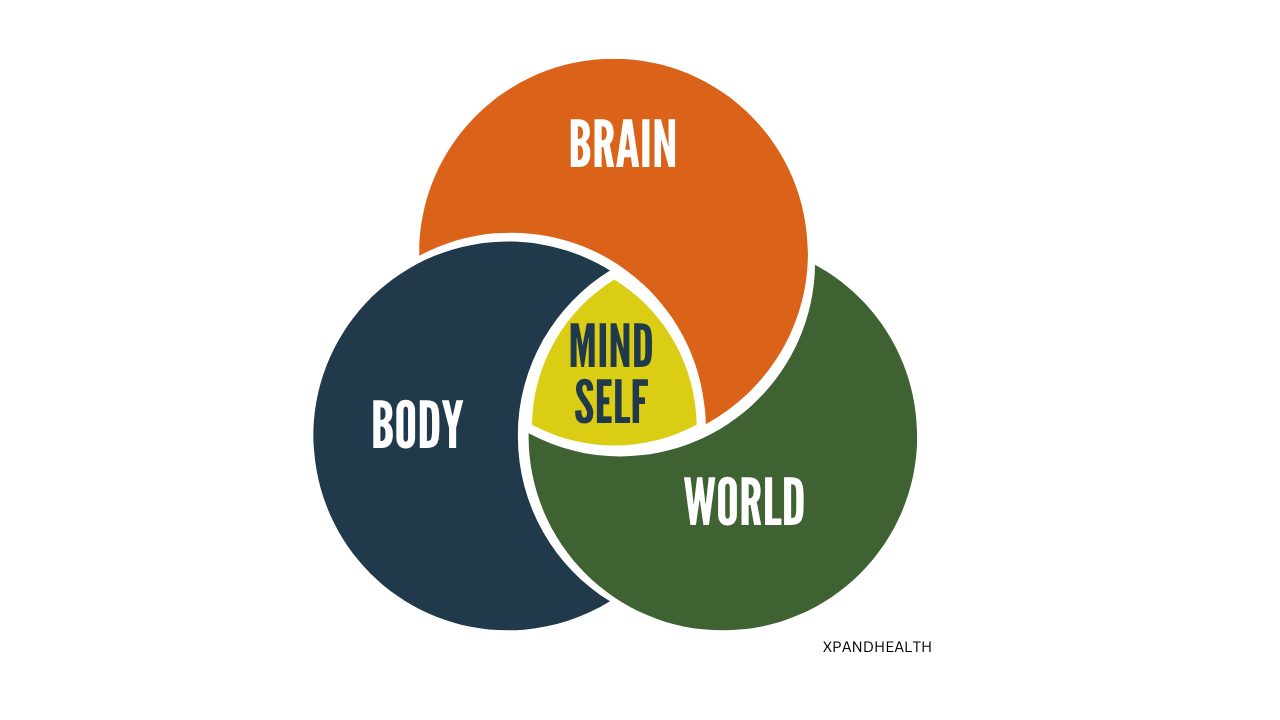
If you are someone who has always valued movement, discipline, and taking care of your health, there often comes a moment when things begin to feel slightly different. Not dramatically worse. Not dysfunctional. Just subtly less resilient.
Recovery takes longer than it used to. Energy feels less consistent. Minor aches linger. Focus requires more effort. You are still doing the “right” things — training, eating well, staying active — yet your system doesn’t respond quite the same way it once did.
Most people are told this is simply aging. But aging, in itself, does not explain the full picture.
Longevity is not only about time passing. It is about how your nervous system interprets stress, load, recovery, and safety across time. The quality of those interpretations determines whether you expand capacity or gradually narrow it.
This is where the NeuroHP Method begins: not with the body alone, but with the brain that regulates it.
Why Traditional Health Models Fall Short
Most conventional fitness and wellness frameworks focus almost exclusively on output. The emphasis is placed on building strength, increasing cardiovascular capacity, improving flexibility, or optimizing nutrition. All of these are important. Strength and aerobic capacity are strongly associated with extended healthspan. Nutritional quality influences metabolic and inflammatory regulation.
However, output alone does not determine longevity. Regulation determines whether output is sustainable.
If the nervous system does not perceive sufficient recovery, sensory clarity, and internal stability, it narrows its tolerance window. You may still train hard, but your recovery bandwidth shrinks. You may still be disciplined, but your stress threshold decreases. You may still be active, but your system feels less adaptable.
This narrowing is often mistaken for inevitable decline.
From a neuroscience perspective, it frequently reflects cumulative stress signals that have not been recalibrated.
Chasing pain locally focuses on output, not input.
If a joint feels stiff, we stretch it. If a muscle aches, we strengthen it. If fatigue appears, we attempt to override it with more discipline. Yet if the brain is operating from a cautious prediction, the local tissue is rarely the entire story. The nervous system is responding to perceived threat, uncertainty, or imbalance somewhere within the system.
Longevity depends not only on how much you can produce, but on how accurately your brain interprets what is happening.
The Interconnected Domains of the NeuroHP Framework
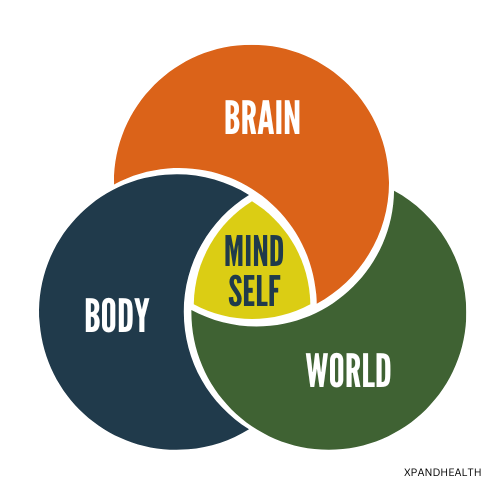
The NeuroHP Method approaches longevity through four interconnected domains: the brain, the body, the environment (world), and the self. These are not separate pillars operating independently. They are continuously influencing one another.
The Brain
The brain is the central regulator. It receives, interprets, and predicts based on incoming information. Every output—movement, pain, energy, recovery, focus—is organized here. It is not reacting in real time as much as it is anticipating what is needed next.
The Body
The body is the expression of the brain’s predictions. Muscle tone, coordination, range of motion, and even inflammation are outputs. When something feels tight, weak, or painful, it is not just a local issue—it reflects how the brain is organizing that area based on the information it has.
The Environment
The environment is a primary source of input. Light, sound, visual complexity, social dynamics, workspace setup, and even the ground you walk on all provide information to the brain. A chaotic or inconsistent environment increases uncertainty, while a supportive environment improves clarity and regulation.
The Self
The self includes beliefs, expectations, identity, and past experiences. These shape interpretations. Two people can experience the same situation and respond completely differently based on how their brains predict meaning and outcome. The self influences whether something is perceived as safe, manageable, or threatening.
How They Interact
These domains are constantly influencing one another.
The environment feeds information to the brain.
The brain interprets that information through the lens of the self.
Based on that interpretation, the brain organizes outputs in the body.
And then the body sends feedback back to the brain—confirming or updating its predictions.
For example:
If your environment is overstimulating, your brain may increase vigilance.
If your self-narrative interprets that as pressure or lack of control, the signal intensifies.
The body responds with increased muscle tone, altered breathing, and reduced recovery capacity.
Over time, this loop reinforces itself.
This is why addressing only one domain rarely creates lasting change.
You can strengthen the body, but if the brain still perceives a threat, it will limit output.
You can change the environment, but if beliefs remain rigid, interpretation won’t shift.
You can work on mindset, but if the body is constantly signaling stress, it’s harder to sustain.
Training Through a Brain-First Approach
A brain-first approach integrates all four domains.
You improve input quality through targeted movement, breath, and sensory work.
You shape the environment to reduce unnecessary load and increase clarity.
You build awareness around patterns, expectations, and internal signals.
And you train the body in a way the brain can safely organize and adapt to.
Because the brain regulates everything.
When the system receives clearer input across all domains, it reduces protective output and allows for more efficient performance, better recovery, and long-term resilience.
This is how sustainable longevity is built—not by isolating parts, but by aligning the whole system.
Reframing Aging
Aging is real, but decline is not solely chronological. It is influenced by cumulative stress load, sensory precision, recovery depth, movement variability, and belief patterns about capability.
If the brain repeatedly experiences safe, competent movement and sufficient recovery, it expands its tolerance. If it repeatedly experiences strain without recalibration, it tightens its thresholds.
This perspective shifts the narrative from inevitability to influence.
You cannot stop time. But you can influence how your nervous system organizes around time.
The NeuroHP Method is not about chasing symptoms or overriding them. It is about improving the quality of information the brain receives so that regulation improves organically. Over time, that shift supports mobility, clarity, energy, and resilience.
Longevity is not a short-term project. It is a long-term relationship with how your nervous system interprets your life.
When you respect that relationship — when you refine input, support recovery, and build capacity with regulation — healthspan expands.
Not through force.
Through intelligent adaptation.
And that is a sustainable strategy.
This blog is intended for educational and exploratory purposes only. It offers a broad overview and a fresh perspective, drawing on a synthesis of existing knowledge and contemporary tools used to organize and clarify information.
The content does not diagnose, treat, or replace medical care, nor is it based on any single research study. It is not a substitute for professional medical advice. Always consult a qualified healthcare provider with any questions or concerns about your health.
For full details, please review our Terms and Conditions here.
